
Back Pain Chiropractor in Mankato: What to Know Before Your First Visit
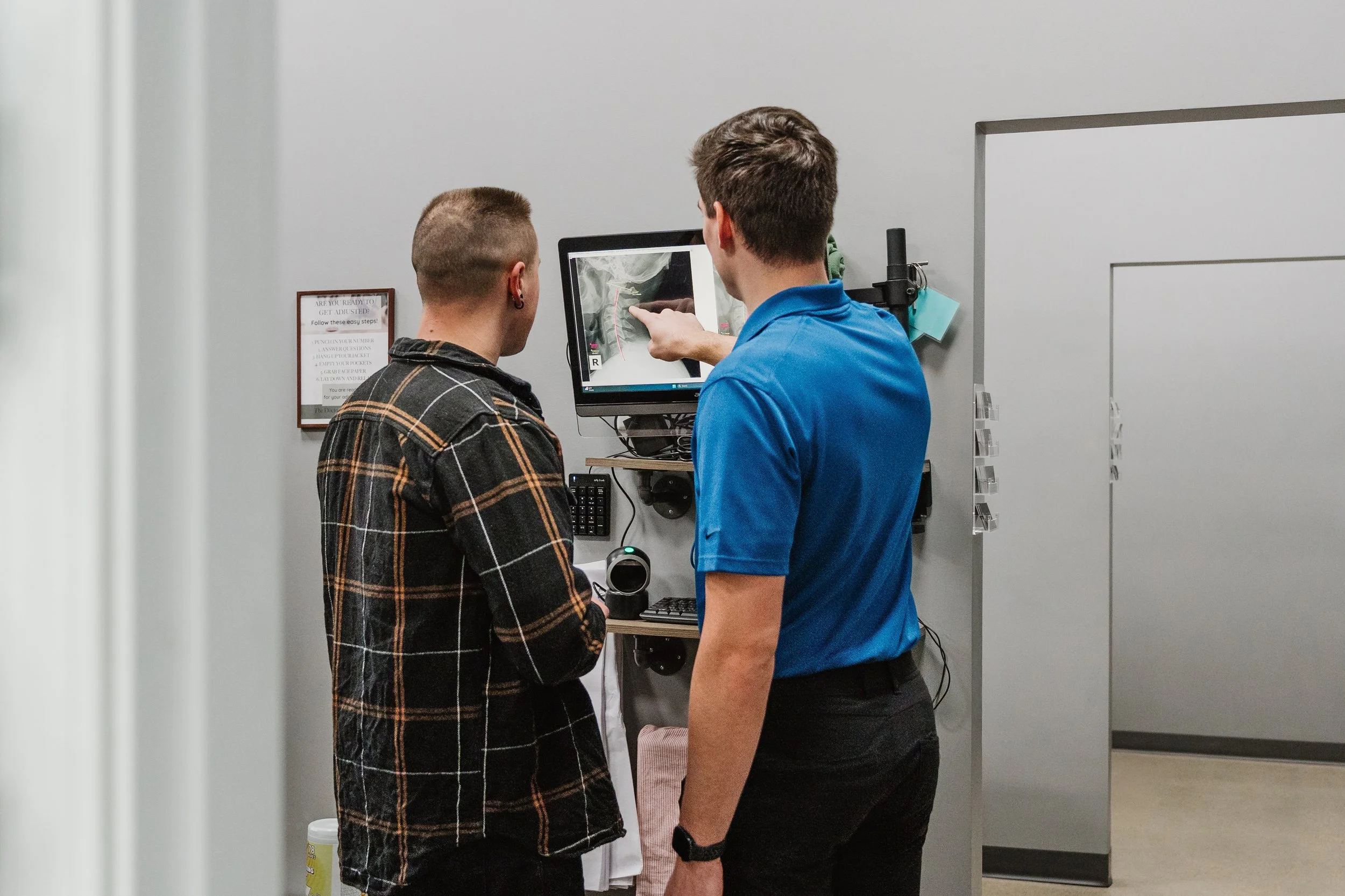
Foundational chiropractic care, built around real life.
If you're reading this, you've probably typed something like "back pain chiropractor Mankato" into Google. Maybe you woke up with it this morning. Maybe it's been building for weeks. Maybe you've been living with it for years and finally decided today is the day you actually do something about it.
Wherever you're starting from, we're glad you're here.
Back pain is one of the most common reasons people come through our doors at TOV Chiropractic. And for good reason — it's one of the most common health complaints in the country, and one of the most life-disrupting. It affects your sleep. It affects how you play with your kids. It affects your work, your workouts, and your general sense of being a person who can do things.
This post is meant to answer the questions most people have before they book with a new chiropractor. What kind of back pain does chiropractic care actually help with? What does a visit look like? How is our approach different? When is back pain a sign of something more serious? And how do you actually get in the door if you're ready?
If you know you're ready and don't need the whole rundown, you can book a first visit at tovchiropractic.com. If you'd rather understand what you're walking into first, keep reading.
What Kind of Back Pain Are You Dealing With?
"Back pain" is a huge umbrella term that covers a lot of different situations, and it's worth naming the shape of what you're actually dealing with, because the answers vary.
Acute back pain came on recently — usually within the last few weeks. It might have started from a specific incident (lifting something wrong, a fall, a car accident) or seemingly out of nowhere. Acute back pain often responds well to a combination of rest, movement, and targeted care.
Chronic back pain has been with you for three months or more. It may have started as an acute episode that never quite resolved, or it may have crept up gradually over years. Chronic back pain tends to have more layers — structural, muscular, postural, and often nervous-system-related — which is why it usually takes more than a single fix to address.
Location matters too. Lower back pain (the most common) is often related to sitting posture, lifting mechanics, pregnancy, sports, or aging discs. Upper back and mid-back pain tend to be more posture-driven — desk work, screen time, and the weight-of-the-world feeling that many adults carry in their shoulders. Neck-adjacent back pain often ties into headaches and jaw tension.
If your back pain is: shooting down one or both legs, accompanied by numbness or tingling, affecting your bladder or bowel function, or the result of a significant injury, please read the section further down on when back pain warrants immediate medical evaluation. Most back pain isn't in that category — but a small percentage is, and we'd rather you know.
Common Back Pain Patterns We See in Our Mankato Office
Beyond the acute-vs-chronic and location distinctions, most of the back pain we see falls into a few recognizable patterns. If you're not sure what you're dealing with, one of these may describe it more precisely.
Lower Back Pain from Sitting
The most common presentation in our office, and increasingly so as more people work from desks or home offices. Long hours in a chair shorten the hip flexors, lengthen the glutes, and stack pressure onto the lower back. The pain often shows up first as end-of-day stiffness, then progresses to constant low-grade ache, then to episodes that put you on the couch for a weekend. This pattern usually responds well to a combination of chiropractic care, movement work, and workspace adjustments.
Sciatica and Radiating Leg Pain
Pain that starts in the lower back or buttock and travels down one leg — sometimes to the calf, sometimes to the foot. Often accompanied by numbness, tingling, or the sensation of pins and needles. Sciatica is usually caused by irritation of the sciatic nerve, and while it can be dramatic and alarming, it typically responds well to conservative care including chiropractic. If it's severe, sudden, or accompanied by weakness, please see a medical doctor first.
Pregnancy and Postpartum Back Pain
The physical shifts of pregnancy — a growing belly, changing posture, softening ligaments, weight gain — put substantial demand on the lower back and pelvis. Postpartum, add the demands of carrying, feeding, and caring for an infant with a body that's still recovering. Gentle chiropractic care during and after pregnancy is well-established as safe and often deeply helpful. We're happy to talk more about our approach to prenatal and postpartum care specifically if that's your situation.
Post-Injury Back Pain That Never Fully Resolved
An old car accident. A fall while shoveling snow. A wrestling injury from high school that flared and then "went away." Injuries that seemed to heal often leave behind patterns of guarding, restriction, and altered movement that quietly become chronic pain years later. These often benefit from careful, patient chiropractic care that addresses the layers the original injury left behind.
Back Pain from Athletic Training or Lifting
Weekend warriors, dedicated CrossFit-ers, lifters, runners, and Mankato-area athletes at all levels often deal with recurring back pain related to training load. These patterns tend to respond well to chiropractic care combined with attention to form, recovery, and mobility work.
Chronic Back Pain That Doesn't Fit a Clear Story
Some people arrive knowing exactly when and how their back pain started. Others arrive with pain that's just always been there, without a clear story. Both are common. In the second case, the underlying picture is often a stack of small contributors — old injuries, postural patterns, life stress, nervous system activation — that add up over years. These patterns often need a longer stretch of care to address, but they can shift.
Why Back Pain Rarely Has One Cause
One of the most common frustrations we hear from patients is that they've been told, at various points, that their back pain is caused by one specific thing — a disc, a muscle, poor posture, weak core, tight hips, stress — and none of the interventions aimed at that one thing have made a lasting difference.
Usually, that's because back pain rarely has one cause. It has a stack of contributors that reinforce each other. A patient we might see could have some combination of: a structural pattern from an old injury, muscular imbalances from years of sitting, restricted movement in the hips or upper back, a nervous system that's been chronically activated, and postural habits that keep pulling the whole system back into the same configuration.
Effective care usually means addressing multiple layers, not chasing one culprit. That's part of why traditional chiropractic — which often focuses on delivering a specific adjustment to a specific segment — can help some patients dramatically and leave others feeling like they got temporary relief that didn't hold. The adjustment addresses one layer; the layers underneath keep pulling things back.
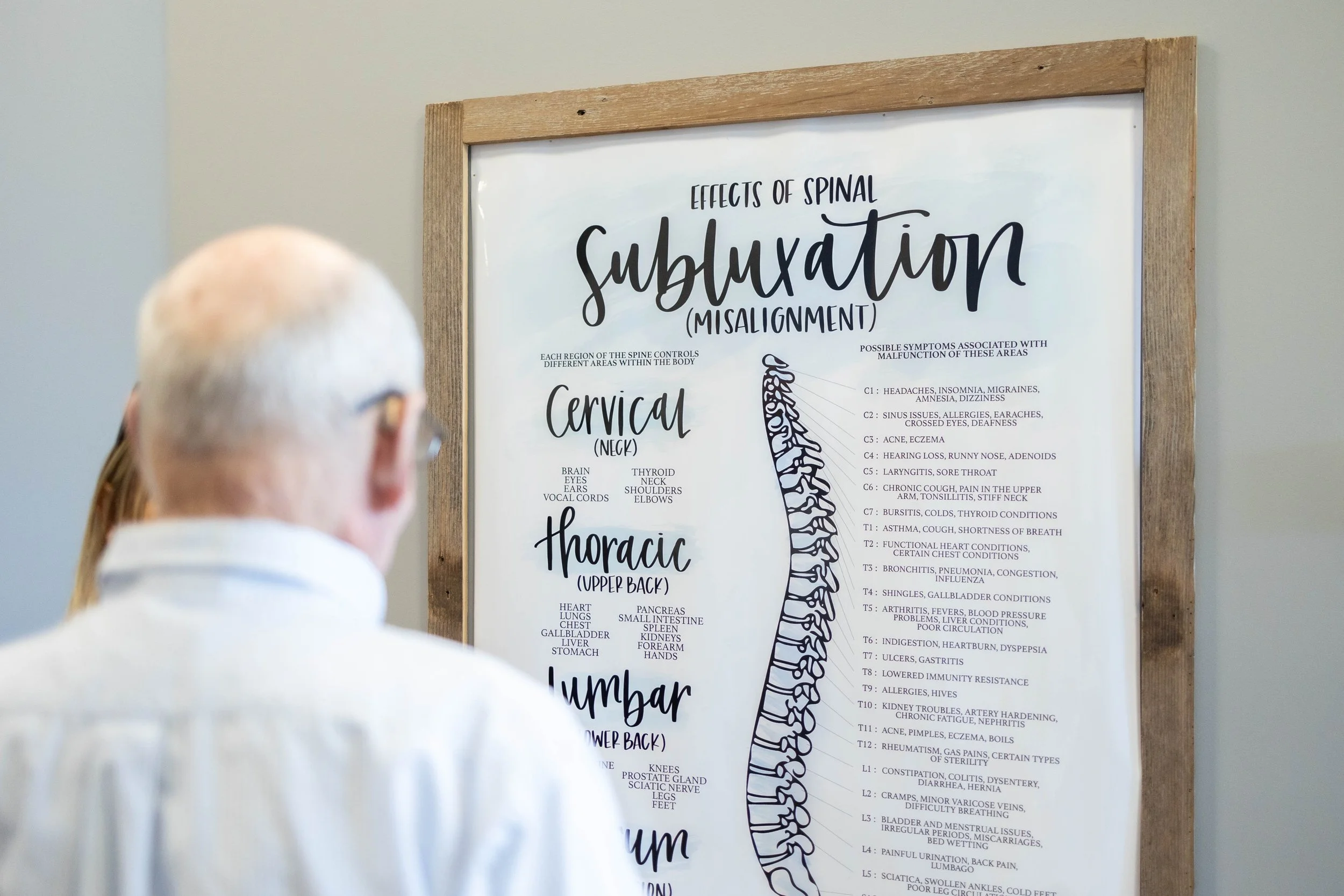
When to See a Chiropractor for Back Pain
Not every back pain situation calls for a chiropractor. Sometimes rest, gentle movement, and a few days of ice or heat resolve things on their own. Sometimes what you need is a physical therapist, a massage therapist, or a primary care doctor.
That said, chiropractic care tends to be a strong fit for back pain when:
The pain has lasted more than a week or two and isn't clearly improving
You've noticed a pattern — pain that comes back consistently, in the same way, or that flares with specific activities
You've tried the basic self-care (rest, stretching, over-the-counter medication) and hit a ceiling
You know your posture, movement, or mechanics are part of the picture
You want to address the underlying pattern, not just take the edge off the current episode
You're pregnant or postpartum and dealing with pain that's related to the physical shifts of that season
If any of that describes you, a first visit is a reasonable next step. If you're not sure, a first visit is also a reasonable way to find out — we'll tell you honestly whether we think our work is a fit for what you're dealing with.
What Chiropractic Care for Back Pain Looks Like at TOV
If you've been to a chiropractor before, or you've seen it on TV, your image of chiropractic is probably a person on a table getting a forceful, dramatic adjustment involving a lot of twisting and cracking. That's one style of chiropractic. It's not the style we practice.
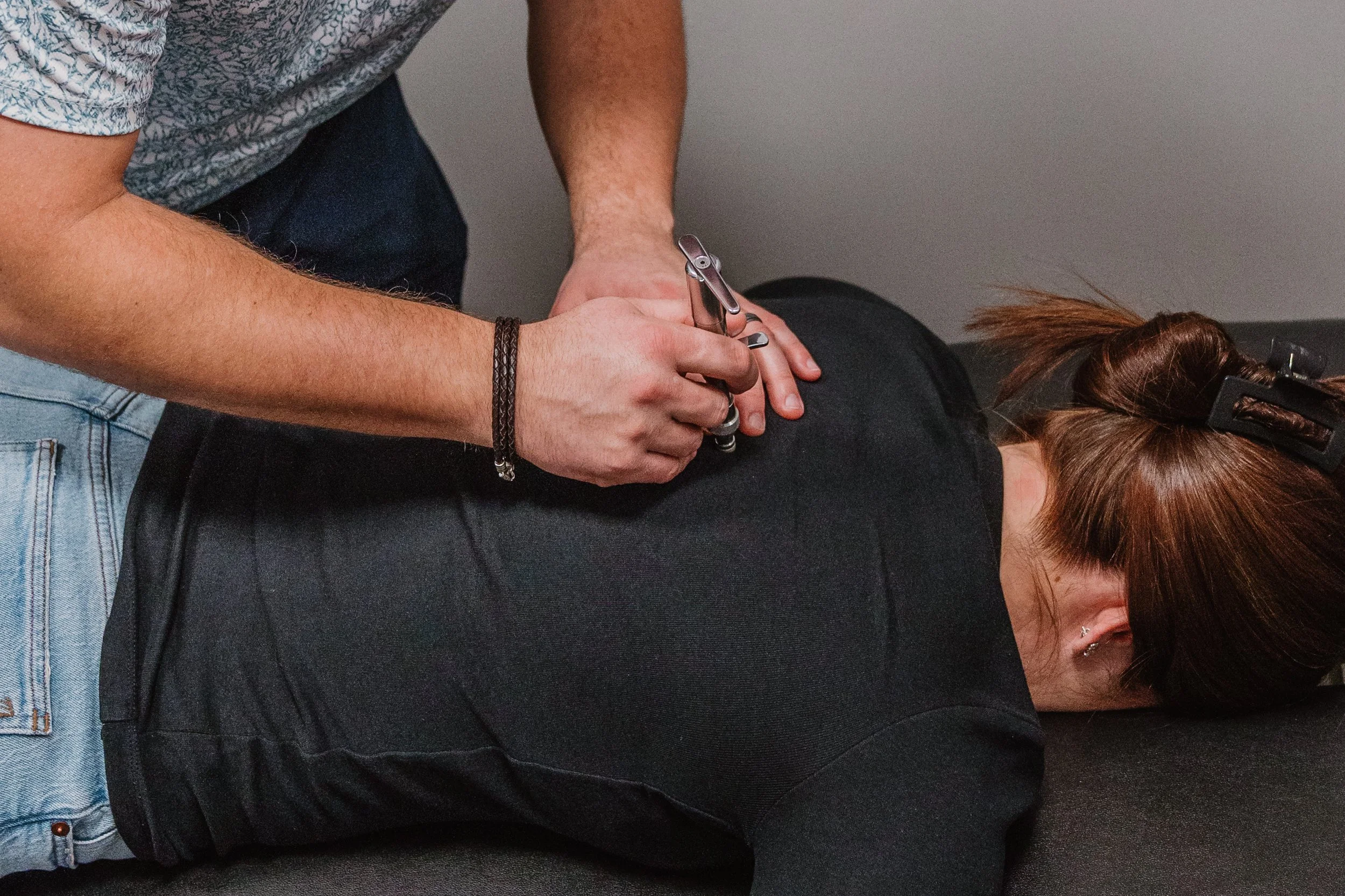
At TOV, we use Torque Release Technique — a gentle, precise, low-force approach that uses a small handheld instrument to deliver specific input to the spine. There's no twisting, no popping, no dramatic movement. Most patients describe it as feeling like a soft tap. It's suitable for people of all ages, all body types, and all comfort levels with chiropractic care — including people who've had bad experiences with traditional chiropractic in the past.
Our approach is also careful about not treating every back pain the same way. We start with a thorough evaluation — your history, your current picture, how your nervous system is functioning, where the movement restrictions and structural patterns are — and then we build a plan that fits your specific situation. Some patients need a handful of visits. Some benefit from a longer stretch of care to address the layers underneath a chronic pattern. Either way, we'll tell you plainly what we think is realistic.
We are not going to promise you a pain-free life. What we can offer is a careful, gentle, individualized approach to back pain that has helped many patients across Mankato and the surrounding area find meaningful relief — often after other approaches hadn't gotten them there.
Ready to book? You can schedule a first visit at tovchiropractic.com, or call our office to talk with our team. We serve Mankato and the surrounding area.
What to Expect at Your First Visit
A first visit at TOV takes about 45 minutes to an hour. Here's what happens.
You'll fill out some paperwork — health history, current concerns, previous care. If you'd rather do this before you arrive, we can send it to you ahead of time so you can settle in when you get to the office.
Then we sit down and talk. What's been happening with your back? When did it start? What have you tried? What activities make it worse or better? How is it affecting your sleep, your work, your life? We want to understand the whole picture, not just the symptom. This part usually takes 15 to 20 minutes.
From there, we do a physical evaluation. We look at how you move, where restrictions are, how your nervous system is functioning, and where the structural patterns are. It's careful and gentle. Nothing hurts.
If we think our care is a fit for your situation, we'll walk you through what we recommend — how many visits, what to expect, what success might look like at each stage. If we think you'd be better served by a different type of care (physical therapy, massage, a medical evaluation), we'll tell you that too. Our goal is to give you real information, not to sign you up for care that isn't right.
You'll typically leave your first visit with a clear picture of what's happening in your body and a realistic path forward — whether that's with us or elsewhere.
How Chiropractic Fits with PT, Massage, and Other Care
A common question we get is whether chiropractic care replaces other things people are already doing for their back — physical therapy, massage, medication, primary care visits. The short answer is no. Chiropractic care works best as part of a broader picture, not as a replacement for it.
Physical therapy and chiropractic care address different layers. PT focuses on strengthening, movement patterns, and functional retraining. Chiropractic focuses on the structural and nervous system layer. Many patients benefit from doing both.
Massage therapy is a wonderful complement to chiropractic care. Massage addresses the soft-tissue layer — muscles, fascia, tension — that often accompanies the structural patterns we work with. Patients who combine the two may see better and faster results than either alone.
Medication has a place, particularly for acute pain that needs to be managed while other care is doing its work. If your primary care physician has prescribed something and it's helping you function while you address the underlying pattern, keep taking it. We are not asking you to choose.
What we ask is that you keep everyone on your care team informed. If your primary care physician wants to know about the chiropractic care you're getting, we're happy to communicate. The best outcomes we see happen when everyone is pulling in the same direction.
When Back Pain Is a Sign of Something More
Most back pain is not dangerous. It's uncomfortable, disruptive, and worth addressing — but it's not a red flag for something serious. There are, however, some symptoms that warrant a medical evaluation rather than a chiropractic visit as the first step.
If you're experiencing any of the following alongside your back pain, please see a medical doctor or go to an emergency room before booking with a chiropractor:
Loss of bladder or bowel control
Numbness in the groin, inner thighs, or genital area
Significant weakness or numbness in one or both legs
Back pain following a significant trauma (car accident, fall from height)
Back pain accompanied by fever, unexplained weight loss, or night sweats
Back pain that's dramatically worse at night or that wakes you from sleep
A known history of cancer with new back pain
These are rare, but they can indicate conditions that need medical intervention. If you're not sure whether your situation warrants medical evaluation, err on the side of getting checked out first. We'd rather you be safe than saved a step.
What Our Mankato Patients Often Notice
Patients who come to TOV for back pain often arrive expecting one thing — pain reduction — and end up noticing several other shifts along the way.
Sleep tends to improve first. Back pain interferes with sleep more than most people realize, and when the underlying pattern begins to release, sleep often comes back before pain fully resolves.
Movement becomes easier. Getting out of a chair, bending to pick something up, turning to check a blind spot while driving — the small movements that had become careful and guarded start to happen without thought again.
Energy returns. Chronic pain is exhausting in ways that don't get named. When it starts to lift, patients often notice they simply have more capacity for their day.
Life returns to normal-shaped. The bike rides you'd stopped taking. The evenings you can actually spend on the floor with the kids. The workouts you'd quietly given up on. These come back, sometimes gradually, sometimes faster than expected.
We can't promise any of this for your specific situation. What we can say is that this pattern is common enough that when it happens, it doesn't surprise us.
Ready to Book?
If you're a Mankato-area resident dealing with back pain and you're ready to see what we can do for you, the easiest place to start is a first visit at TOV Chiropractic.
You can book online at tovchiropractic.com, or call our office to talk with our team. We'll get you scheduled at a time that works, walk you through what to expect, and answer any questions you have before you come in.
Our office is located at 1813 Adams Street in Mankato. We serve patients from Mankato, North Mankato, Eagle Lake, Mapleton, St. Peter, and the surrounding communities within about 20 miles.
Whether you decide to book with us or not, we hope this post gave you useful information about what chiropractic care for back pain actually looks like, and what to think about as you decide on your next step. Back pain doesn't have to be your normal. We'd be glad to help you figure out what's actually going on and what to do about it.